Credit Karma, founded in 2007, an Intuit company (Nasdaq: INTU), is a consumer technology company with more than 130 million members in the United States, U.K. and Canada, including more than half of all U.S. millennials. While best known for pioneering free credit scores, the company’s members turn to Credit Karma for everything related to their financial goals, including identity monitoring, applying for credit cards, shopping for loans (car, home and personal), auto insurance, savings and checking accounts
We talked to Harish Gaggar, Staff Software Site Reliability Engineer at Credit Karma. He manages their data infrastructure. While Coder is typically only considered to solve developer use cases, Harish has been pushing it to new areas. Thanks to him, a range of technical and non-technical teams get their work done with the massive amounts of data that Credit Karma handles.
Problem statement: local laptops can't handle petabytes of data
Credit Karma uses big data for data science modeling and analytical reporting, which helps them assess the efficacy of their products and services. Credit Karma process and store petabytes of data in Google BigQuery at scale. To handle this kind of size, they were forced to rely heavily on developing technological infrastructure which should be able to provide the adequate platform with their choice of software and hardware in a quick and easy way. To achieve meaningful output data to protect the value they were creating rather than spending time setting up all platform dependencies on their local machines.
Various teams were obviously disparities in terms of data infrastructure awareness and proficiency despite the fact that everyone wanted to use data to generate value, hence Credit Karma needed a technology that is consistent, shareable and scale well with demand of data compute so that teams can produce a great deal of value on the big data to provide member benefits.
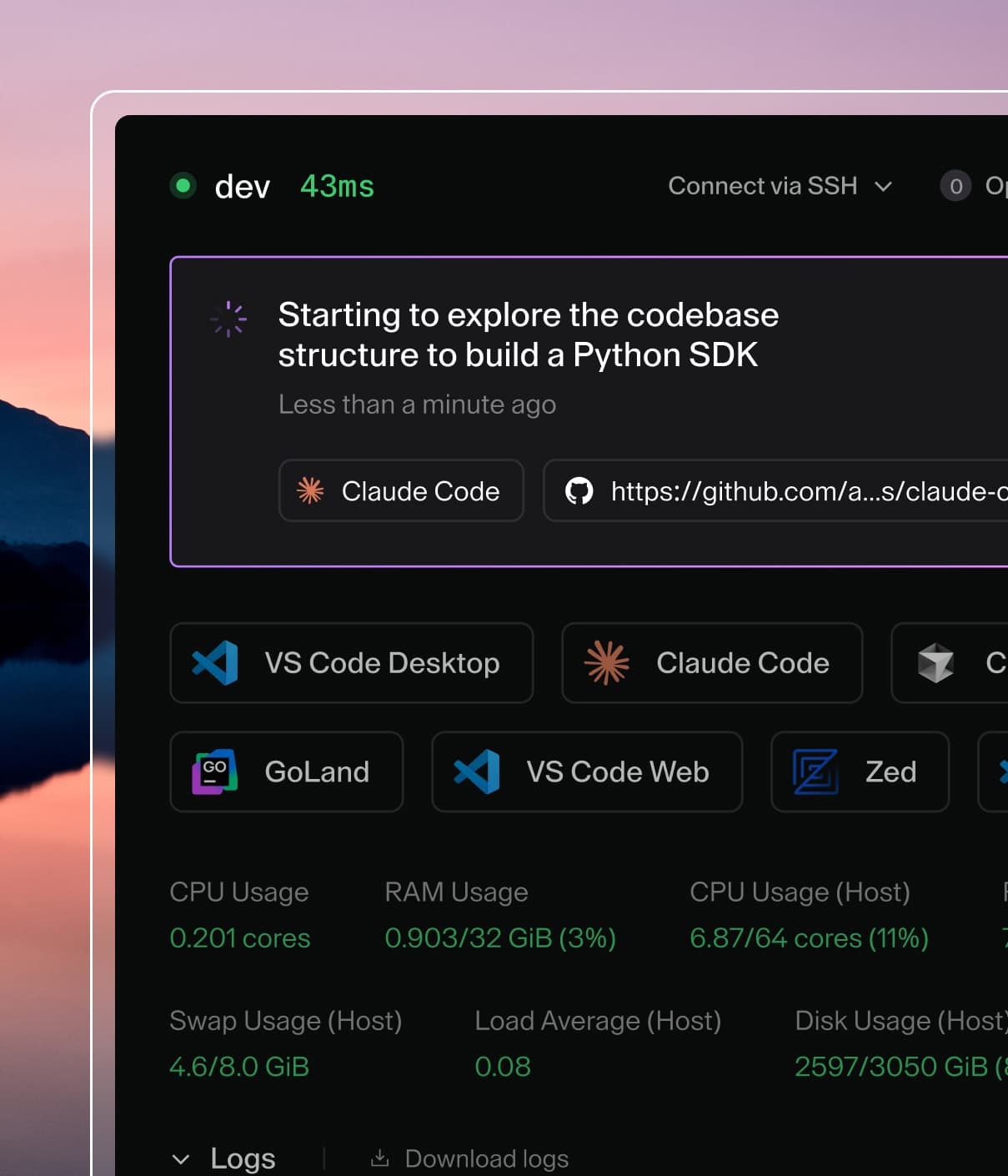
Day to day challenges were Analytics and data scientist where not able to share data results in a flexible way. Many users are struggling with their Local Apple or Windows laptops hardware constraint to quickly analyze large data or run any experiments. In summary, there was a search for a technology which is easy to set up a desired environment like Python, R Studio, Java, Scala, Terraform, ML framework, GPU workspaces along with Agentic workflow use cases etc. with user choice of IDE with few simple clicks and take action on the data immediately.
After working on various open source projects, Harish has identified Coder for a one stop solution for Credit Karma to provide a platform that solves complex business use cases and platform requirements due to its agility, flexibility and scalability.
According to Harish, Coder's extensive use stems from its ability to "address data science, analyst, and engineering requirements by consolidating various intricate software platforms and offering straightforward, few-click alternatives for end users to deploy environments with their preferred software and hardware specifications."
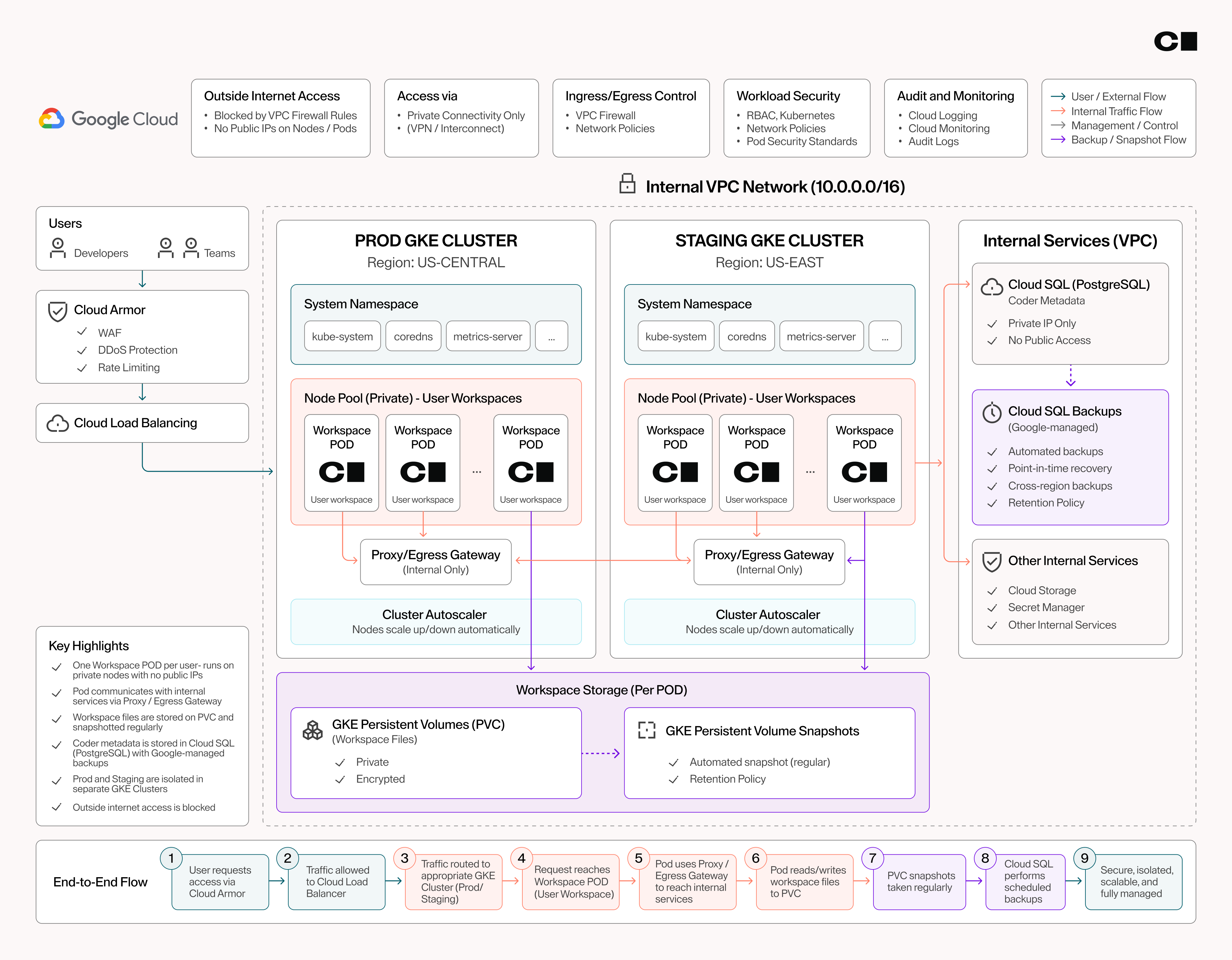
Infrastructure: To manage and scale containerized workspace applications effectively, Credit Karma implemented Coder infrastructure on a Google Cloud Kubernetes cluster, allowing user environments to be deployed as pods.
Coder templates
Harish and his Coder admin team create Coder templates, written in Terraform, to configure and set up user workspaces. These templates abstract complexity by consolidating dependencies, data sources, and cloud resources into a single declarative configuration, resulting in fast, repeatable, and stable workspace creation.
The foundation of this system involves the Coder admin team building and publishing specific Docker images—pre-loaded with required software/packages for various business use cases—to the Internal Google Artifact Registry (GAR) after passing all security scans. The Coder templates pull these private images from Artifact Registry using the node pool’s Google service account, which is granted the appropriate Artifact Registry read permissions.
For runtime access to Google Cloud services, each workspace Pod runs with a Kubernetes Service Account mapped to a Google Service Account through Workload Identity Federation for GKE. This KSA-to-GSA binding allows the workspace to access only the specific Google Cloud resources it is authorized to use, without storing service account keys inside the container/Coder workspace pod. This provides least-privilege, keyless access for workloads running inside the Coder workspace Pods.
Further, Coder Terraform-configured template framework applies all necessary scripts and parameters, abstracting all complexities so end-users can select a pre-configured template (e.g., Python, R Studio, ML framework, Terraform, Scala and Agentic workflows) and launch a complete cloud environment within minutes with just a few clicks.
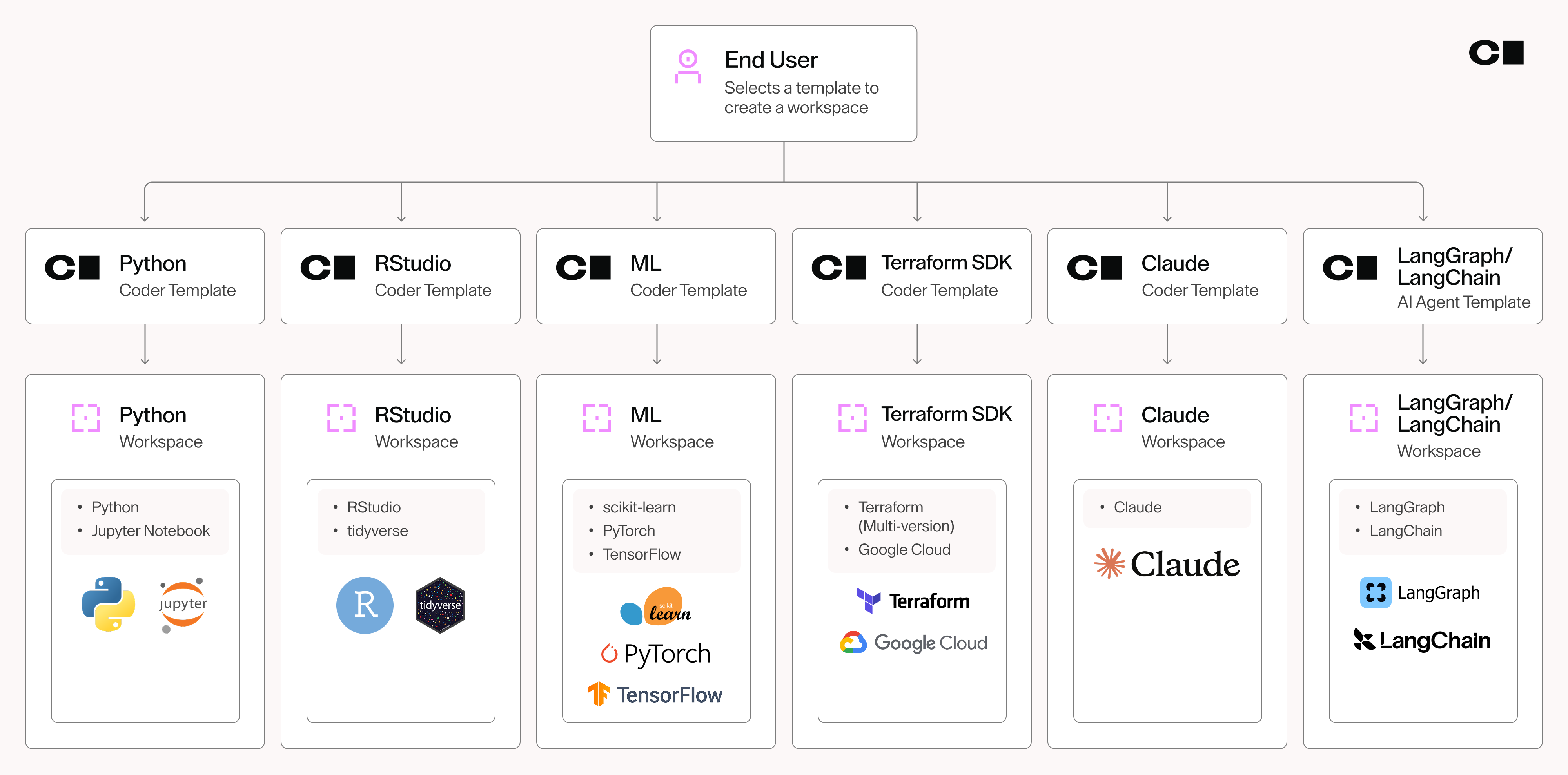
Flexibility is further enhanced by template parameters, which provide user-controllable settings for customizing environments. Developers can specify exact CPU, RAM, and GPU requirements for data analysis and model training, while Coder handles the provisioning and decommissioning of these cloud instances. Notable examples include:
- Streamlined workflows for analysts, where entering an experiment ID launches an environment that automatically loads datasets, runs experiments, and logs results.
- GPU-accelerated workspaces for Data Scientists, which improved lending projects like Refund Advance and File Now, Pay Later. These workspaces enabled 20x faster model training, allowing for granular hyperparameter fine-tuning and improved model accuracy.
This approach ensures that testers and deployers can work within the same environments used during development, increasing overall confidence. Users maintain total control over the workspace lifecycle resuming, stopping, or deleting instances and can reliably recreate identical environments from original templates.
Build, review, and publish apps
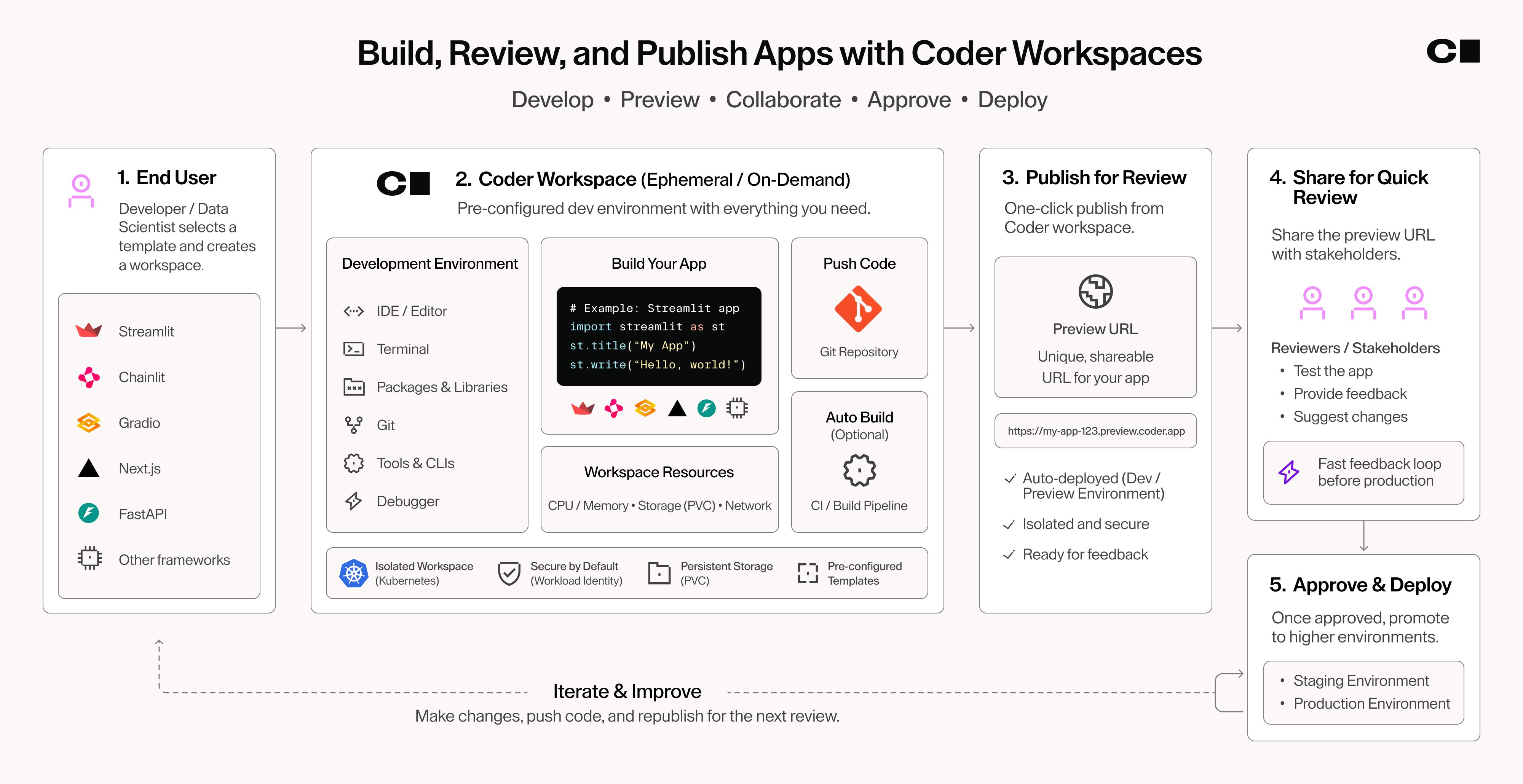
Credit Karma teams leverage Coder to accelerate the development of bespoke applications for data-intensive tasks. By writing Python code with standard libraries or utilizing Claude for assistance, users can rapidly build and deploy these apps. Fostering enhanced collaboration and efficient data sharing, these customized applications are published directly to workspace templates for immediate team access.
Build time efficiency
By collaborating with internal users to map out specific platform requirements, Harish successfully transitioned various use cases into Docker images compatible with Coder Templates, resulting in a 97% boost in build time efficiency. These templates allow users to launch necessary platforms instantly without taxing local hardware. For instance, configuring a full Python environment, which previously required 30 minutes, now takes less than a minute via Coder, while offering users customizable hardware options.
“Providing choice of reusable templates scales development productivity and increase user focus on building meaningful data”
Cloud cost control
Cloud billing originally accumulated around the clock because of a set quantity of GPU machines operating in standalone environments. Harish has since developed several Docker images utilizing NVIDIA's CUDA Toolkit for GPU and configured Coder workspaces with specific, restricted GPU driver options. This setup ensures that end users only select the GPUs they need on an as-needed basis. To optimize the GKE cluster's GPU node pool, workspaces now shut down automatically after business hours. Consequently, Harish anticipates that monthly GPU expenditures will be reduced by more than 50% in the years ahead.
Security posture
Harish was able to improve security by setting up the entire Coder Infrastructure as service as a complete Air gapped solution within Credit Karma on premise VPC network based GKE cluster. Credit Karma has full control over IP ranges that are allowed to login to Coder with their SSO Authentication by leveraging further Coder suite of user management and access control features.
In all, the Credit Karma team is putting Coder in situations that are having a substantial impact at Credit Karma. Their success was made obvious when an internal survey of Coder satisfaction showed ratings exclusively with 96% approval rating in an internal net promoter score (NPS).
Conclusion: More to do with Coder
The numbers from Coder’s impact are undeniable. Harish and his colleagues are assisting technical and non-technical teams with a diverse range of business use cases involving a lot of data through Coder. He is certain that teams can accomplish more with Coder in the near future. Credit Karma began with 50 Coder users and currently has more than 250+ users.
“Customer satisfaction results from offering a user-friendly platform with excellent support and flexibility,” Harish Gaggar, Staff Software Site Reliability Engineer
We originally made Coder to give developers a way to consistently create and manage development environments. We’re proud to see Credit Karma use Coder in new ways. It turns out that the features that we built to support development teams are just as useful to non-technical teams too.