Back to architecture

You manage

Your Cloud Infrastructure

Coder runs wherever you run—your cloud, your rules

Deployment model

Coder is self-hosted software that runs in your infrastructure. You deploy the control plane and workspace nodes in your cloud, Kubernetes cluster, or data center.

Supported infrastructure

Kubernetes

EKS, GKE, AKS, OpenShift

Amazon Web Services

EKS, EC2

Google Cloud

GKE, Compute Engine

Microsoft Azure

AKS, Azure VMs

On-premises

Your data center

Air-gapped

Isolated networks

Note: Coder works anywhere you can run containers or VMs. No vendor lock-in.

What you control

  • Region, availability zone, data center
  • Compute resources (instance types, node pools)
  • Storage (persistent volumes, object storage)
  • Data residency and compliance
  • Backup and disaster recovery
  • Scaling and capacity

Full control, zero lock-in

Your infrastructure, your policies, your data. Coder is just software running in your environment.

Control plane requirements

Minimum

For proof-of-concept and small teams

  • Compute

    2 vCPU, 4 GB RAM

  • Database

    PostgreSQL 13+

  • Storage

    10 GB for container images

Recommended

For production deployments

  • Compute

    4 vCPU, 8 GB RAM (multiple replicas)

  • Database

    Managed PostgreSQL with HA

  • Load balancer

    For high availability

Workspace node sizing

Workspace nodes host developer workspaces. Size them based on developer workload.

Light

Web Dev

Frontend, scripting, docs

CPU
2 vCPU
RAM
4 GB
Storage
20 GB

Medium

Backend Dev

Most Common

CPU
4 vCPU
RAM
8 GB
Storage
50 GB

Heavy

ML, data

ML training, large datasets

CPU
8+ CPU
RAM
16+ GB
Storage
100+ GB

Pro tip: Create different templates for different workload sizes. Let developers pick the right size for their task.

Multi-region deployment

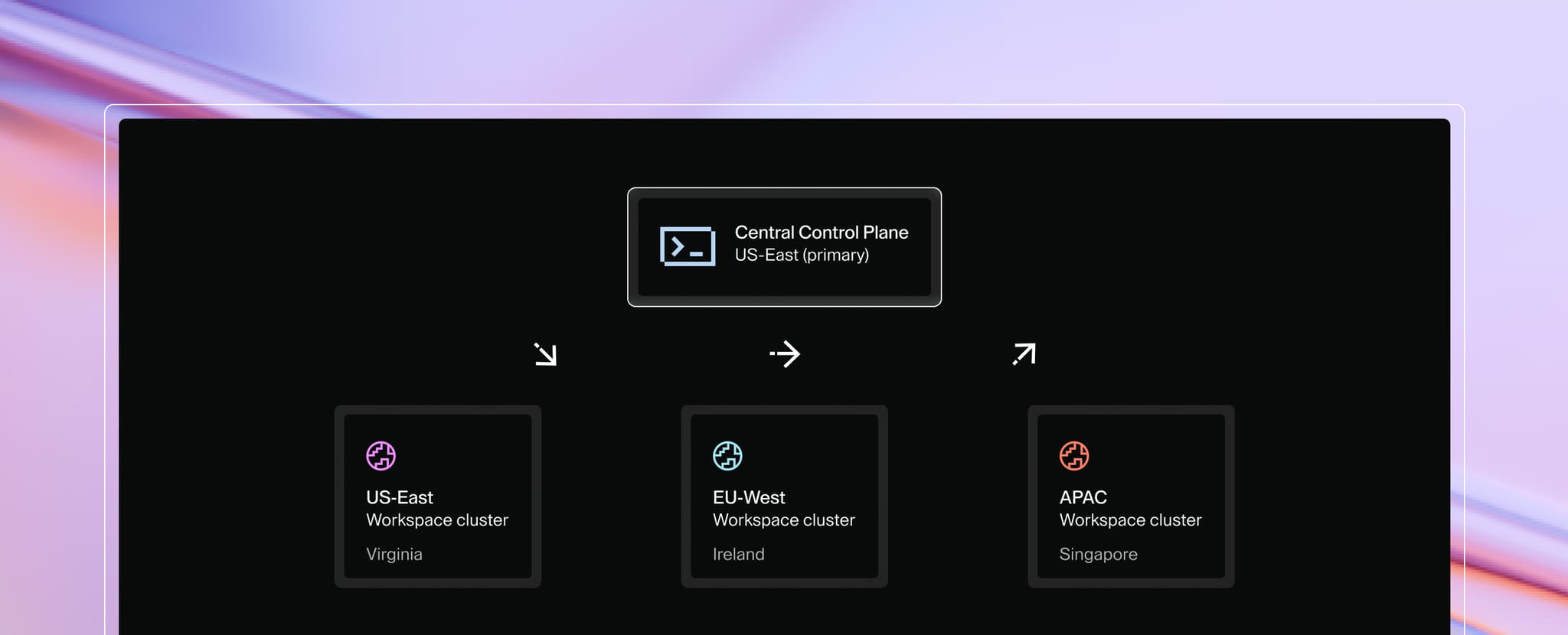
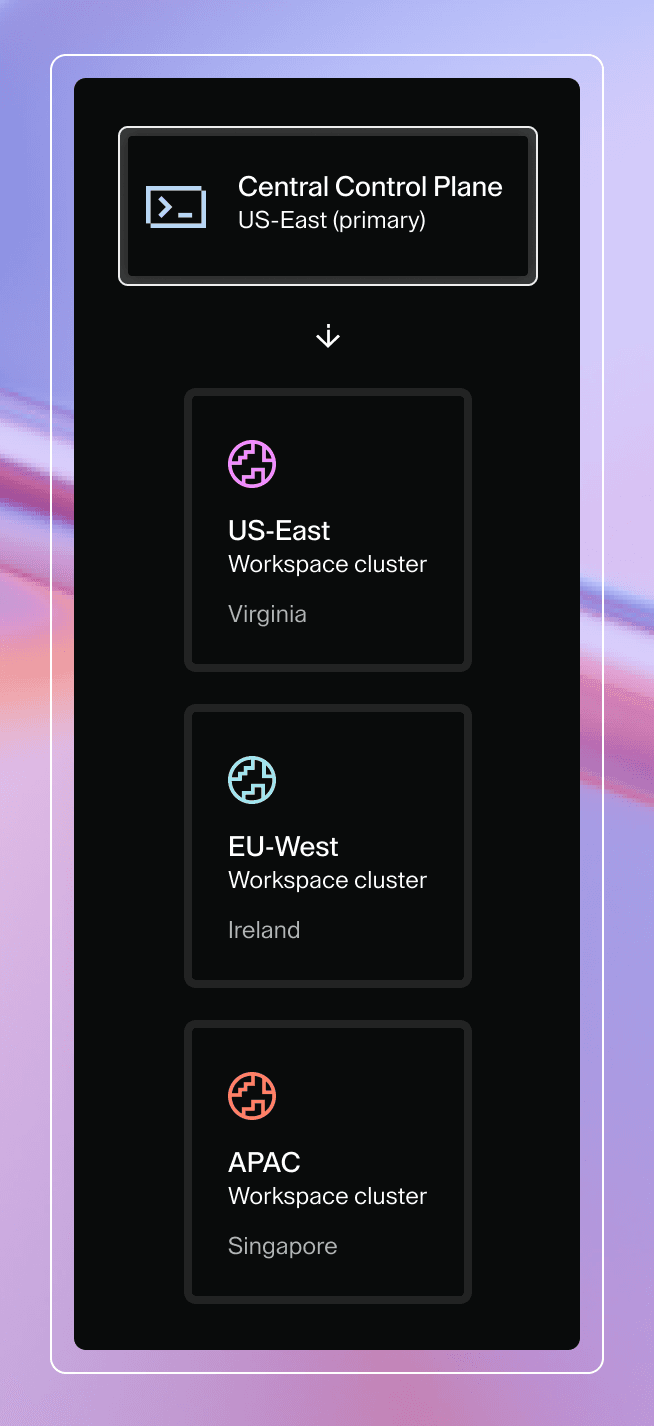
Deploy a single control plane with workspace clusters in multiple regions. Developers connect to the closest cluster.

Coder's central control plane can connect to different workspace clusters, such as US-East for Virginia, EU-West for Ireland, and APAC for Singapore.

Benefits

  • Reduced latency for global teams

  • Data residency compliance

  • Disaster recovery options

How it works

  • Control plane orchestrates all regions. Workspaces run in regional clusters. Metadata syncs to central DB.

FAQs

Does Coder require Kubernetes?
No. Coder works on Kubernetes (EKS, GKE, AKS, etc.), but also supports Docker, AWS EC2, Azure VMs, GCP Compute Engine, and even on-premises VMs. Choose what fits your infrastructure.
Can we run Coder in an air-gapped environment?
What are the networking requirements?
How do we handle disaster recovery?
Can we deploy across multiple cloud providers?